Necrotising Enterocolitis (NEC)
A serious bowel illness, mainly in premature babies.
What is Necrotising Enterocolitis (NEC)?
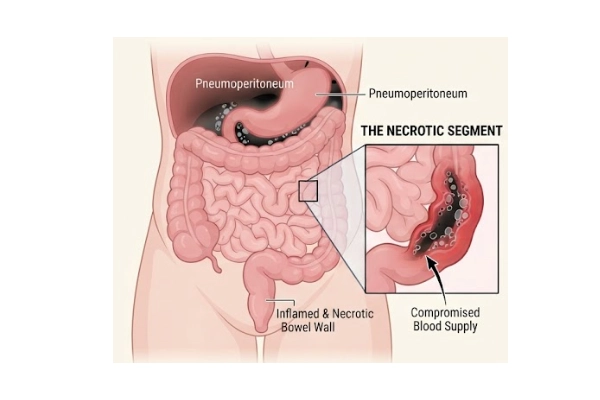
Necrotising enterocolitis is a serious illness in which the wall of a newborn baby’s bowel becomes inflamed and can begin to die. It occurs mainly in premature babies, and the risk increases the smaller and earlier the baby.
It usually appears in the first weeks of life, often after feeds have been started. The bowel becomes distended, feeds are not tolerated, and the baby becomes unwell.
Most babies are treated medically — feeds stopped, bowel rested, antibiotics, and intensive support. A proportion progress to perforation and need surgery.
Breast milk is protective, and the way feeds are advanced in a premature baby matters. This is one of the reasons neonatal units are careful about feeding regimes.
NEC is managed in a neonatal intensive care setting. The surgeon works alongside the neonatal team, and the assessment includes an honest judgement of whether the baby needs a level of care that must be provided elsewhere.
In your language
Necrotising Enterocolitis (NEC)
A serious bowel illness, mainly in premature babies.
Necrotising enterocolitis is a serious illness in which the wall of a newborn baby’s bowel becomes inflamed and can begin to die. It occurs mainly in premature babies, and the risk increases the smaller and earlier the baby.
குடல் அழற்சி & சிதைவு (NEC)
NEC என்பது முக்கியமாக முன்கூட்டியே பிறந்த குழந்தைகளை பாதிக்கும் ஒரு தீவிர குடல் நோய். பிறந்த முதல் சில வாரங்களில், பால் கொடுக்கத் தொடங்கிய பின் ஏற்படலாம். அறிகுறிகள்: பால் ஜீரணமாகாமை, வயிறு உப்புதல், மலத்தில் ரத்தம், குழந்தை சோர்வடைதல். பெரும்பாலான குழந்தைகளுக்கு பால் நிறுத்தி, ஆன்டிபயாடிக் மற்றும் தீவிர சிகிச்சை மூலம் குணமாகும். குடல் ஓட்டை விழுந்தால் அல்லது நிலைமை மோசமானால் மட்டுமே அறுவை சிகிச்சை. தாய்ப்பால் இந்த நோயிலிருந்து குழந்தையை பாதுகாக்க உதவுகிறது. இது NICU சிகிச்சை தேவைப்படும் நிலை.
നെക്രോട്ടൈസിംഗ് എന്ററോകൊളൈറ്റിസ് (NEC)
പ്രധാനമായും മാസം തികയാതെ ജനിച്ച കുഞ്ഞുങ്ങളെ ബാധിക്കുന്ന ഗുരുതരമായ കുടൽ രോഗമാണ് NEC. ജനിച്ച ആദ്യ ആഴ്ചകളിൽ, പാൽ തുടങ്ങിയ ശേഷം ഉണ്ടാകാം. ലക്ഷണങ്ങൾ: പാൽ ദഹിക്കാതിരിക്കൽ, വയറു വീർക്കൽ, മലത്തിൽ രക്തം, കുഞ്ഞ് തളരുക. മിക്ക കുഞ്ഞുങ്ങളും പാൽ നിർത്തി ആന്റിബയോട്ടിക്കും തീവ്രപരിചരണവും നൽകി സുഖം പ്രാപിക്കും. കുടൽ പൊട്ടിയാലോ നില വഷളായാലോ മാത്രമേ ശസ്ത്രക്രിയ വേണ്ടിവരൂ. മുലപ്പാൽ ഈ രോഗത്തിൽ നിന്ന് സംരക്ഷണം നൽകുന്നു.
What Parents Notice
Not every child shows every sign. If something on this list matches your child, it is worth an examination rather than a guess.
- Feed intolerance — increasing gastric residuals, vomiting, or bile-stained aspirates
- A distended, sometimes discoloured or shiny abdomen
- Blood in the stool
- Temperature instability, apnoea, lethargy
- Poor circulation, a mottled appearance, falling blood pressure
- Rapid deterioration in a premature baby who had been stable
How It Is Confirmed
- X-ray of the abdomen — the key test, looking for pneumatosis (gas within the bowel wall), gas in the portal vein, or free air indicating perforation
- Serial X-rays, since the picture changes hour by hour
- Blood tests: full blood count, platelets, CRP, blood gases and cultures
- Ultrasound of the abdomen in selected cases
- Close clinical observation of abdominal girth, aspirates and the baby’s overall condition
How It Is Treated
- Medical treatment is the first line for most babies: feeds stopped, nasogastric decompression, intravenous fluids and nutrition, broad-spectrum antibiotics, and full intensive care support including ventilation and circulatory support where needed.
- Close monitoring with repeated examination and X-rays.
- Surgery is indicated when the bowel perforates or when the baby deteriorates despite maximal medical treatment.
- The operation involves removing dead bowel and usually forming a stoma, with the intention of restoring continuity later. In a very small or unstable baby, a peritoneal drain may be placed as a temporising measure.
- Feeds are restarted cautiously after a period of bowel rest, usually with breast milk.
- A minority of babies later develop a stricture at the site of healing and need a further procedure.
Does My Child Need Surgery?
Not every child with Necrotising Enterocolitis (NEC) needs an operation. These are the situations in which surgery is advised — and the decision is always made after examining your child, never from a description alone.
Free air on the X-ray, indicating perforation — the clearest indication
Clinical deterioration despite full medical management
A fixed dilated loop of bowel, an abdominal mass, or an abdominal wall that becomes discoloured
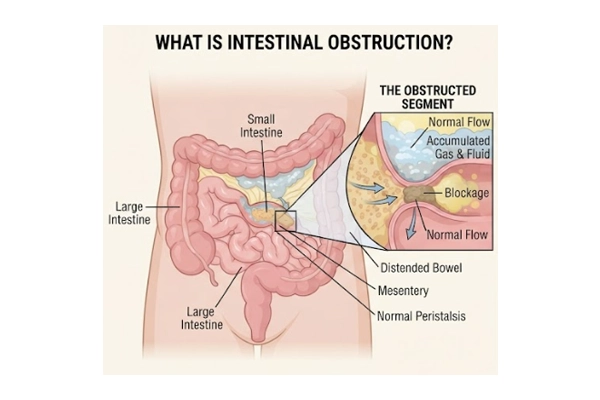
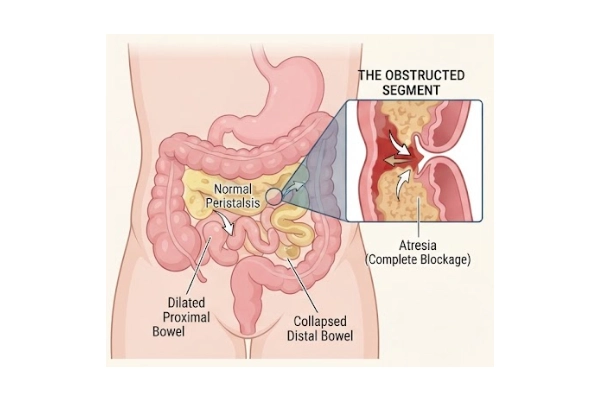
Later, if a stricture develops and causes obstruction after recovery
What Happens Over Time
Varies with severity and with how premature the baby is. Most babies treated medically recover well. Those needing surgery face a longer course, and some later develop a narrowing at the healed site or need prolonged nutritional support.
This describes what usually happens, not what will happen to your child. The surgeon will give you a specific picture after examining them.
Can It Be Prevented?
Risk is genuinely reduced by breast milk, by advancing feeds cautiously in premature babies, and by avoiding unnecessary antibiotics. It cannot be eliminated.
From First Visit to Going Home
What happens, in order, so that nothing on the day comes as a surprise.
Consultation
Dr. Pratheep Samraj examines your child and goes through the history, earlier reports and any treatment already given.
Investigation
Only the tests that change the decision are asked for — commonly an ultrasound, blood tests, and occasionally an X-ray or a scopy.
Explanation
You are told what the condition is, whether it needs surgery, what happens if you wait, and what the operation involves.
Treatment
If surgery is appropriate it is planned with paediatric anaesthetic cover, with ICU and NICU support available in the hospital.
Follow-up
You go home with written instructions and a review date, and you can reach the hospital by phone or WhatsApp in between.
Hospital stay
Weeks. NEC is a neonatal intensive care illness, and recovery is measured in weeks rather than days.
Recovery at home
Slow and stepwise. Feeds are reintroduced gradually. Babies who needed bowel removed may need prolonged nutritional support.
Follow-up
Growth, nutrition, bowel function, and where relevant, planning for stoma closure and monitoring for stricture.
Please bring with you: all previous scan reports, blood test reports, discharge summaries, records of any earlier operation, current medicines, and your child’s immunisation card. Photographs on your phone of a swelling that comes and goes are genuinely useful.
Please note: this page is general information about Necrotising Enterocolitis (NEC), not advice about your child. Timing, suitability for surgery and the expected result differ from child to child and are decided only after clinical evaluation.
Questions Parents Ask
If your question is not here, send it on WhatsApp — you will get an answer from the hospital team.
Dr. Pratheep Samraj
Consultant Paediatric & Neonatal Surgeon · Palliyadi, Kanyakumari
Super-specialist surgical care for newborns, infants and children, with expertise in paediatric urology, congenital anomalies, gastro-intestinal surgery and minimally invasive surgery.
Related Conditions
NEC is treated in intensive care, and most babies recover without surgery.
Stopping feeds, antibiotics and full support come first; an operation is for the minority who need it. If your baby is in a nursery elsewhere and you want a surgical opinion, call.
Consultation 10:00 AM - 1:00 PM & 4:00 PM - 8:00 PM · 24-hour laboratory & pharmacy
In an emergency — green vomiting in a baby, a groin swelling that will not go back, severe tummy pain, or a newborn not passing urine or meconium — come straight to the hospital or to your nearest emergency department. Do not wait for a reply to a message.