Intestinal Atresia
A segment of bowel is closed off or missing at birth.
What is Intestinal Atresia?
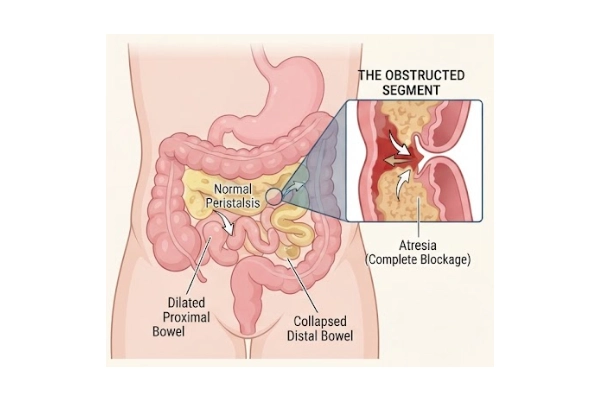
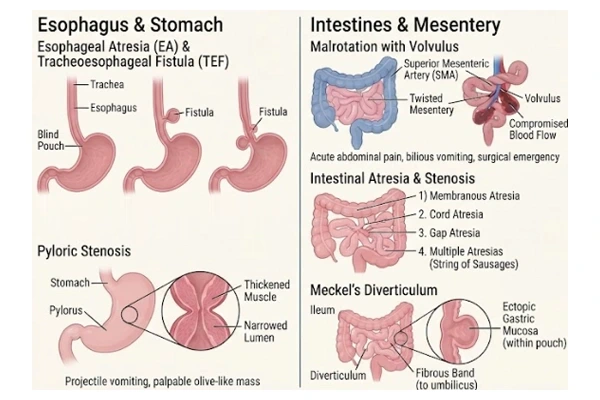
Atresia means a segment of the intestine is closed off or absent, so nothing can pass beyond it. It can occur at any level — the duodenum just beyond the stomach, the jejunum or ileum in the small bowel, or the colon.
Duodenal atresia arises from a failure of the tube to open out during development and is strongly associated with Down syndrome. Small bowel atresia is usually the result of an interruption to the blood supply of a segment of bowel before birth.
It presents in the first day or two of life with vomiting. If the block is beyond the point where bile enters, the vomit is green, and that is the sign that matters.
It is often suspected before birth, when an antenatal scan shows dilated bowel or excess amniotic fluid.
Atresia is a correctable condition. What determines the outcome is how promptly the baby is stabilised and operated, and how much healthy bowel remains.
In your language
Intestinal Atresia
A segment of bowel is closed off or missing at birth.
Atresia means a segment of the intestine is closed off or absent, so nothing can pass beyond it. It can occur at any level — the duodenum just beyond the stomach, the jejunum or ileum in the small bowel, or the colon.
குடல் அடைப்பு பிறவிக் குறைபாடு (அட்ரீசியா)
குடல் அட்ரீசியா என்பது பிறவியிலேயே குடலின் ஒரு பகுதி அடைபட்டிருக்கும் நிலை. பிறந்த முதல் ஒன்று–இரண்டு நாட்களில் வாந்தி வரும் — பச்சை நிற வாந்தி மிக முக்கியமான அறிகுறி. வயிறு உப்பும், கருமலம் வராது. எக்ஸ்-ரே மூலம் கண்டறியப்படும். சிகிச்சை: முதலில் நரம்பு வழி திரவம் கொடுத்து குழந்தையை நிலைப்படுத்துதல், பின்னர் அடைபட்ட பகுதியை சரிசெய்யும் அறுவை சிகிச்சை. அறுவை சிகிச்சைக்குப் பின் குடல் வேலை செய்யத் தொடங்க சில நாட்கள் முதல் வாரங்கள் வரை ஆகலாம் — அதுவரை NICU-வில் நரம்பு வழி ஊட்டச்சத்து தேவைப்படும். இது சரிசெய்யக்கூடிய நிலை; விரைவான சிகிச்சையே முக்கியம்.
കുടൽ അട്രീസിയ
ജന്മനാ കുടലിന്റെ ഒരു ഭാഗം അടഞ്ഞിരിക്കുന്ന അവസ്ഥയാണ് കുടൽ അട്രീസിയ. ജനിച്ച് ഒന്നു രണ്ടു ദിവസത്തിനുള്ളിൽ ഛർദ്ദി ഉണ്ടാകും — പച്ച നിറത്തിലുള്ള ഛർദ്ദിയാണ് പ്രധാന ലക്ഷണം. വയറു വീർക്കും, ആദ്യ മലം പോകില്ല. എക്സ്-റേയിലൂടെ കണ്ടെത്താം. ചികിത്സ: ആദ്യം ഞരമ്പിലൂടെ ദ്രാവകം നൽകി കുഞ്ഞിനെ സ്ഥിരപ്പെടുത്തുക, പിന്നീട് അടഞ്ഞ ഭാഗം ശരിയാക്കുന്ന ശസ്ത്രക്രിയ. ശസ്ത്രക്രിയയ്ക്കു ശേഷം കുടൽ പ്രവർത്തിക്കാൻ ദിവസങ്ങളോ ആഴ്ചകളോ എടുക്കാം — അതുവരെ NICU-ൽ ഞരമ്പിലൂടെ പോഷണം നൽകും.
What Parents Notice
Not every child shows every sign. If something on this list matches your child, it is worth an examination rather than a guess.
- Vomiting in the first 24 to 48 hours of life, typically green or bile-stained
- A swollen tummy — more marked the lower down the blockage is
- Failure to pass meconium, or passing only small amounts of pale mucus
- Feeding intolerance and increasing gastric aspirates
- Jaundice
- An antenatal scan showing dilated bowel loops or excess amniotic fluid
- Dehydration and weight loss if the diagnosis is delayed
How It Is Confirmed
- X-ray of the abdomen — the double bubble sign in duodenal atresia, or dilated loops with fluid levels lower down
- Contrast studies where the level or the type of obstruction is unclear
- Ultrasound of the abdomen
- Blood tests for hydration, electrolytes, infection and blood group
- Echocardiogram and genetic assessment, particularly with duodenal atresia and its association with Down syndrome
- Review of the antenatal scan reports, which frequently contain the first clue
How It Is Treated
- Immediate stabilisation: nothing by mouth, a nasogastric tube to decompress the stomach, intravenous fluids, correction of electrolytes and warmth.
- Surgery to bypass or resect the atretic segment and join healthy bowel to healthy bowel — duodenoduodenostomy for duodenal atresia, resection and anastomosis for small bowel atresia.
- Careful inspection of the whole bowel at operation, since more than one atresia can be present.
- NICU care afterwards, with intravenous nutrition until the bowel starts working, which can take days to weeks.
- Feeds are introduced slowly and built up. Patience during this phase is normal and expected.
- Where a baby needs longer-term intravenous nutrition or a level of intensive care beyond what is available, referral is arranged promptly and openly.
Does My Child Need Surgery?
Not every child with Intestinal Atresia needs an operation. These are the situations in which surgery is advised — and the decision is always made after examining your child, never from a description alone.
Once the diagnosis is made and the baby is stabilised — atresia is always treated surgically
Urgently, if there are signs of perforation, volvulus or a deteriorating baby
Stabilisation first is not a delay: operating on a dehydrated newborn with abnormal electrolytes is more dangerous than a short period of preparation
What Happens Over Time
Generally good where a single atresia is repaired and enough healthy bowel remains — these babies go on to feed, grow and develop normally. Where a long segment had to be removed, nutrition needs specialist attention for months or longer.
This describes what usually happens, not what will happen to your child. The surgeon will give you a specific picture after examining them.
Can It Be Prevented?
It cannot be prevented. It results from a problem in development or an interruption to the bowel blood supply before birth.
From First Visit to Going Home
What happens, in order, so that nothing on the day comes as a surprise.
Consultation
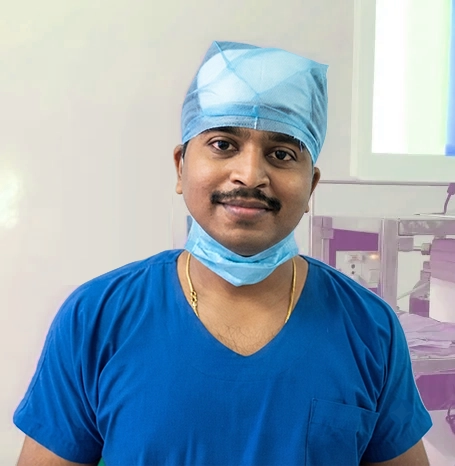
Dr. Pratheep Samraj examines your child and goes through the history, earlier reports and any treatment already given.
Investigation
Only the tests that change the decision are asked for — commonly an ultrasound, blood tests, and occasionally an X-ray or a scopy.
Explanation
You are told what the condition is, whether it needs surgery, what happens if you wait, and what the operation involves.
Treatment
If surgery is appropriate it is planned with paediatric anaesthetic cover, with ICU and NICU support available in the hospital.
Follow-up
You go home with written instructions and a review date, and you can reach the hospital by phone or WhatsApp in between.
Hospital stay
Usually two to three weeks or longer, largely determined by how quickly the bowel begins working and feeds are established.
Recovery at home
Feeding is the slow part. Weight gain and tolerating full feeds are the milestones before discharge.
Follow-up
Growth, nutrition and bowel function are followed for months to years, especially where a length of bowel had to be removed.
Please bring with you: all previous scan reports, blood test reports, discharge summaries, records of any earlier operation, current medicines, and your child’s immunisation card. Photographs on your phone of a swelling that comes and goes are genuinely useful.
Please note: this page is general information about Intestinal Atresia, not advice about your child. Timing, suitability for surgery and the expected result differ from child to child and are decided only after clinical evaluation.
Questions Parents Ask
If your question is not here, send it on WhatsApp — you will get an answer from the hospital team.
Dr. Pratheep Samraj
Consultant Paediatric & Neonatal Surgeon · Palliyadi, Kanyakumari
Super-specialist surgical care for newborns, infants and children, with expertise in paediatric urology, congenital anomalies, gastro-intestinal surgery and minimally invasive surgery.
Related Conditions
A newborn who vomits green and has not passed meconium needs a surgeon today.
Atresia is repaired by joining healthy bowel to healthy bowel, and babies do well when it is done early. Come straight in and do not feed the baby on the way.
Consultation 10:00 AM - 1:00 PM & 4:00 PM - 8:00 PM · 24-hour laboratory & pharmacy
In an emergency — green vomiting in a baby, a groin swelling that will not go back, severe tummy pain, or a newborn not passing urine or meconium — come straight to the hospital or to your nearest emergency department. Do not wait for a reply to a message.