Hirschsprung Disease
Missing nerve cells in the bowel cause severe constipation from birth.
What is Hirschsprung Disease?
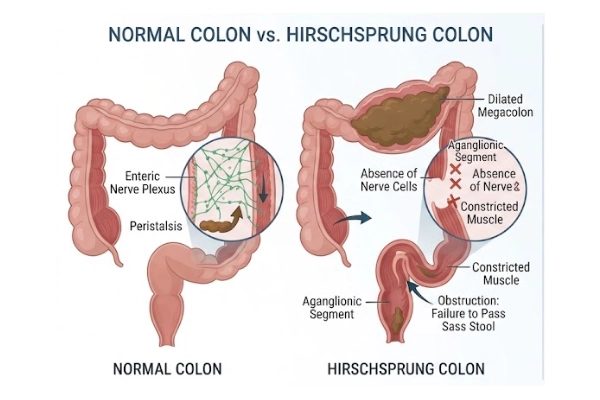
The bowel moves its contents along using coordinated muscle waves, which depend on nerve cells in the bowel wall. In Hirschsprung disease those nerve cells failed to develop in the last part of the bowel, so that segment stays permanently contracted and nothing passes through it.
The affected segment always begins at the anus and extends upwards for a variable distance. In most children it involves the rectum and lower sigmoid colon; in a few it involves much more of the colon.
The healthy bowel above becomes hugely dilated as it works against the block, which is what produces the swollen tummy.
It is much more common in boys and is more frequent in children with Down syndrome.
The key distinction for parents: ordinary childhood constipation begins after weaning or toilet training. Hirschsprung constipation begins in the newborn period and never truly goes away.
In your language
Hirschsprung Disease
Missing nerve cells in the bowel cause severe constipation from birth.
The bowel moves its contents along using coordinated muscle waves, which depend on nerve cells in the bowel wall. In Hirschsprung disease those nerve cells failed to develop in the last part of the bowel, so that segment stays permanently contracted and nothing passes through it.
ஹிர்ஷ்ஸ்பிரங் நோய்
ஹிர்ஷ்ஸ்பிரங் நோயில் குடலின் கடைசிப் பகுதியில் நரம்பு செல்கள் இல்லாததால் மலம் கடந்து செல்ல முடியாது. பிறந்த 24–48 மணி நேரத்திற்குள் கருமலம் (meconium) கழிக்காதது முக்கிய அறிகுறி. வயிறு உப்புதல், பச்சை வாந்தி, பிறந்ததிலிருந்தே கடுமையான மலச்சிக்கல் ஆகியவை காணப்படும். பயாப்சி பரிசோதனை மூலம் உறுதி செய்யப்படுகிறது. சிகிச்சை: நரம்பு செல்கள் இல்லாத பகுதியை அகற்றி நல்ல குடலை இணைக்கும் அறுவை சிகிச்சை. காய்ச்சல், துர்நாற்ற வயிற்றுப்போக்கு, வயிறு உப்புதல் இருந்தால் அது ஆபத்தான நிலை — உடனே மருத்துவமனைக்கு வாருங்கள்.
ഹിർഷ്സ്പ്രംഗ് രോഗം
ഹിർഷ്സ്പ്രംഗ് രോഗത്തിൽ കുടലിന്റെ അവസാന ഭാഗത്ത് നാഡീകോശങ്ങൾ ഇല്ലാത്തതിനാൽ മലം കടന്നുപോകാൻ കഴിയില്ല. ജനിച്ച് 24–48 മണിക്കൂറിനുള്ളിൽ ആദ്യ മലം പോകാത്തതാണ് പ്രധാന ലക്ഷണം. വയറു വീർക്കൽ, പച്ച ഛർദ്ദി, ജനനം മുതലുള്ള കടുത്ത മലബന്ധം എന്നിവ കാണാം. ബയോപ്സിയിലൂടെയാണ് സ്ഥിരീകരിക്കുന്നത്. ചികിത്സ: നാഡീകോശങ്ങളില്ലാത്ത ഭാഗം നീക്കി ആരോഗ്യമുള്ള കുടൽ യോജിപ്പിക്കുന്ന ശസ്ത്രക്രിയ. പനി, ദുർഗന്ധമുള്ള വയറിളക്കം, വയറു വീർക്കൽ എന്നിവയുണ്ടായാൽ ഉടൻ ആശുപത്രിയിൽ എത്തിക്കുക.
What Parents Notice
Not every child shows every sign. If something on this list matches your child, it is worth an examination rather than a guess.
- Failure to pass meconium in the first 24 to 48 hours after birth — the single most important early sign
- A swollen, distended tummy in a newborn
- Green, bile-stained vomiting
- Severe constipation from the earliest weeks, needing suppositories or washouts to produce a stool
- A characteristic forceful gush of stool and gas after a rectal examination
- Poor feeding and failure to gain weight
- In older children: chronic severe constipation, a distended abdomen, thin build and poor growth
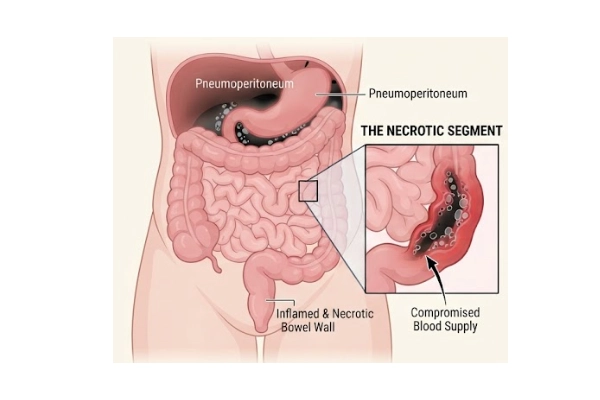
- Enterocolitis — fever, foul explosive diarrhoea, a swollen tender tummy and a very unwell child. This is a dangerous complication and needs immediate hospital care
How It Is Confirmed
- Rectal suction biopsy — the definitive test, showing the absence of nerve cells in the bowel wall
- Contrast enema, which often shows a narrow segment with a dilated bowel above it
- X-ray of the abdomen showing dilated bowel loops
- Anorectal manometry in older children in selected settings
- Careful clinical history — particularly the timing of the first meconium, which parents should try to remember or find in the birth records
How It Is Treated
- Initial management: rectal washouts to decompress the bowel, along with fluids and nutrition. Parents are taught to perform washouts at home in the period before surgery.
- Antibiotics and urgent hospital treatment for enterocolitis whenever it occurs.
- The definitive treatment is a pull-through operation: the segment without nerve cells is removed and healthy bowel is brought down and joined to the anus.
- This may be done as a single-stage procedure, sometimes laparoscopically assisted, or in stages with a temporary stoma when the child is unwell or the bowel is very dilated.
- After surgery, bowel habit takes time to settle. Frequent stools, perianal soreness and occasional soiling are common early on and improve.
- Long-term follow-up covers bowel function, continence, growth and the risk of further enterocolitis.
Does My Child Need Surgery?
Not every child with Hirschsprung Disease needs an operation. These are the situations in which surgery is advised — and the decision is always made after examining your child, never from a description alone.
Once the diagnosis is confirmed on biopsy, surgery is planned — the timing depends on the baby’s weight, condition and how well washouts are working
Urgent surgery, often with a stoma, if the child has enterocolitis or obstruction that washouts cannot control
Older children diagnosed late are still repaired, after a period of decompression
What Happens Over Time
Most children do well after a pull-through and grow normally. Bowel habit takes months to settle, and a proportion need an ongoing bowel programme into school age. Enterocolitis remains a risk before and after surgery, which is why parents are taught to recognise it.
This describes what usually happens, not what will happen to your child. The surgeon will give you a specific picture after examining them.
Can It Be Prevented?
It cannot be prevented. It is present from birth and sometimes runs in families.
From First Visit to Going Home
What happens, in order, so that nothing on the day comes as a surprise.
Consultation
Dr. Pratheep Samraj examines your child and goes through the history, earlier reports and any treatment already given.
Investigation
Only the tests that change the decision are asked for — commonly an ultrasound, blood tests, and occasionally an X-ray or a scopy.
Explanation
You are told what the condition is, whether it needs surgery, what happens if you wait, and what the operation involves.
Treatment
If surgery is appropriate it is planned with paediatric anaesthetic cover, with ICU and NICU support available in the hospital.
Follow-up
You go home with written instructions and a review date, and you can reach the hospital by phone or WhatsApp in between.
Hospital stay
The pull-through operation typically means about a week in hospital, longer if a stoma is formed or if the child was unwell beforehand.
Recovery at home
Stools are frequent and loose at first, and the skin around the anus needs careful barrier care. Bowel habit improves gradually over months.
Follow-up
Long-term, covering bowel function, continence, growth and prompt recognition of enterocolitis.
Please bring with you: all previous scan reports, blood test reports, discharge summaries, records of any earlier operation, current medicines, and your child’s immunisation card. Photographs on your phone of a swelling that comes and goes are genuinely useful.
Please note: this page is general information about Hirschsprung Disease, not advice about your child. Timing, suitability for surgery and the expected result differ from child to child and are decided only after clinical evaluation.
Questions Parents Ask
If your question is not here, send it on WhatsApp — you will get an answer from the hospital team.
Dr. Pratheep Samraj
Consultant Paediatric & Neonatal Surgeon · Palliyadi, Kanyakumari
Super-specialist surgical care for newborns, infants and children, with expertise in paediatric urology, congenital anomalies, gastro-intestinal surgery and minimally invasive surgery.
Related Conditions
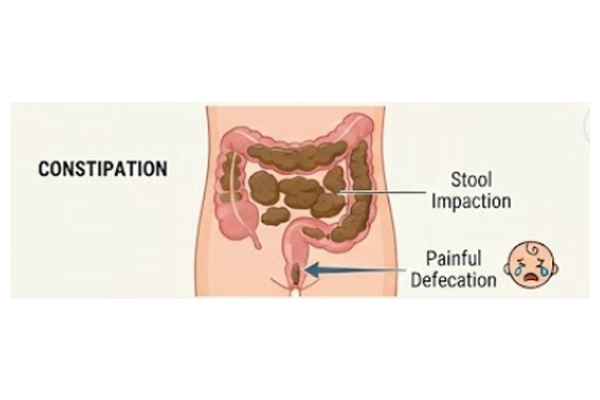
Constipation from the very first days of life is a different problem.
A newborn who did not pass meconium within 48 hours, or a baby who has never opened his bowels without help, should be tested rather than treated with laxatives. A rectal biopsy settles it.
Consultation 10:00 AM - 1:00 PM & 4:00 PM - 8:00 PM · 24-hour laboratory & pharmacy
In an emergency — green vomiting in a baby, a groin swelling that will not go back, severe tummy pain, or a newborn not passing urine or meconium — come straight to the hospital or to your nearest emergency department. Do not wait for a reply to a message.