Anorectal Malformation
The anus is absent, closed or in the wrong place at birth.
What is Anorectal Malformation?
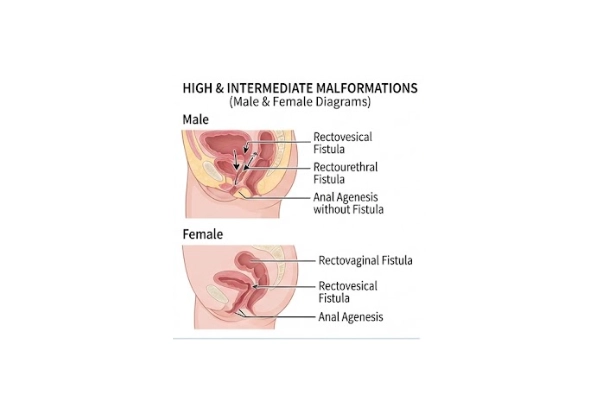
In an anorectal malformation the lower end of the bowel has not formed normally. The anus may be absent altogether, may be present but very narrow, may sit in the wrong position, or the bowel may open abnormally into the urinary tract in boys or the vagina in girls through a fistula.
It is present from birth and is found on the routine newborn examination — which is exactly why every newborn should have the anus looked at, not assumed.
The malformations range widely. Low types, where the bowel comes down almost to the skin, are relatively simple to correct. High types, where it ends well above the pelvic floor muscles, need staged reconstruction.
Associated abnormalities are common, particularly of the spine, kidneys, heart and food pipe, so a baby with an anorectal malformation is screened for these as a matter of routine.
The long-term goal is not only an opening in the right place but bowel control. Many children achieve it; some need an ongoing bowel management programme, and that is planned openly with the family from the start.
In your language
Anorectal Malformation
The anus is absent, closed or in the wrong place at birth.
In an anorectal malformation the lower end of the bowel has not formed normally. The anus may be absent altogether, may be present but very narrow, may sit in the wrong position, or the bowel may open abnormally into the urinary tract in boys or the vagina in girls through a fistula.
மலவாய் பிறவிக் குறைபாடு
சில குழந்தைகள் மலவாய் இல்லாமலோ, மிகச் சிறியதாகவோ, தவறான இடத்திலோ பிறக்கின்றன. பிறந்த ஒவ்வொரு குழந்தையின் மலவாயையும் பரிசோதிப்பது அவசியம். பிறந்த 24 மணி நேரத்திற்குள் கருமலம் வரவில்லை, வயிறு உப்புகிறது, அல்லது சிறுநீர்/யோனி வழியாக மலம் வருகிறது என்றால் உடனடியாக மருத்துவரைப் பாருங்கள். சிகிச்சை படிப்படியாக செய்யப்படும் — முதலில் கொலோஸ்டமி, பின்னர் சில மாதங்களில் முழு சரிசெய்யும் அறுவை சிகிச்சை, கடைசியாக கொலோஸ்டமி மூடுதல். அறுவை சிகிச்சைக்குப் பின் மலவாய் விரிவாக்கம் மற்றும் நீண்டகால மலக் கட்டுப்பாட்டு பராமரிப்பு தேவை.
മലദ്വാര ജന്മ വൈകല്യം
ചില കുഞ്ഞുങ്ങൾ മലദ്വാരം ഇല്ലാതെയോ വളരെ ചെറുതായോ തെറ്റായ സ്ഥാനത്തോ ജനിക്കുന്നു. ജനിക്കുന്ന എല്ലാ കുഞ്ഞിന്റെയും മലദ്വാരം പരിശോധിക്കണം. 24 മണിക്കൂറിനുള്ളിൽ ആദ്യ മലം പോയില്ല, വയറു വീർക്കുന്നു, അല്ലെങ്കിൽ മൂത്രത്തിലൂടെയോ യോനിയിലൂടെയോ മലം വരുന്നു എങ്കിൽ ഉടൻ ഡോക്ടറെ കാണണം. ചികിത്സ ഘട്ടങ്ങളായാണ് — ആദ്യം കൊളോസ്റ്റമി, പിന്നീട് കുറച്ചു മാസങ്ങൾക്കുള്ളിൽ പൂർണ ശസ്ത്രക്രിയ, ഒടുവിൽ കൊളോസ്റ്റമി അടയ്ക്കൽ. ശസ്ത്രക്രിയയ്ക്കു ശേഷം ദീർഘകാല പരിചരണം ആവശ്യമാണ്.
What Parents Notice
Not every child shows every sign. If something on this list matches your child, it is worth an examination rather than a guess.
- No anal opening visible at birth, or an opening that is clearly too small or in the wrong position
- No meconium passed in the first 24 hours
- Meconium appearing from the vagina, from the urethra, or in the urine
- A progressively swollen tummy in the first day or two of life
- Green, bile-stained vomiting
- In milder types found later: severe constipation from early infancy, ribbon-like stools, and an anus that looks anteriorly placed or narrow
How It Is Confirmed
- Clinical examination of the perineum at birth — the diagnosis is made by looking
- A period of observation over the first 24 hours to see where, if anywhere, meconium appears
- X-ray of the abdomen, including an invertogram or prone lateral film, to judge how low the bowel ends
- Ultrasound of the perineum, spine, kidneys and abdomen
- Echocardiogram to check the heart
- X-ray of the spine and sacrum, since the sacral anatomy is one of the strongest predictors of future continence
- Distal colostogram before definitive repair, to define the exact anatomy and any fistula
How It Is Treated
- A low malformation may be repaired in the newborn period with a single operation, sometimes after a period of dilatation.
- A high or intermediate malformation is usually managed in three stages: a colostomy in the newborn period to divert stool, a definitive pull-through operation (PSARP) at a few months of age, and closure of the colostomy afterwards.
- Anal dilatations are carried out for a period after the pull-through, and parents are taught to do these at home. Doing them consistently is important.
- Bowel management afterwards — diet, laxatives or enemas as needed — is a normal part of care, not a sign that surgery failed.
- Associated conditions of the spine, kidneys and heart are managed alongside.
- Where a baby needs a level of neonatal intensive care beyond what is available on the day, that is said plainly and referral is arranged without delay.
Does My Child Need Surgery?
Not every child with Anorectal Malformation needs an operation. These are the situations in which surgery is advised — and the decision is always made after examining your child, never from a description alone.
In the newborn period — a baby with no anal opening needs surgical assessment on day one, not after a wait
Emergency colostomy if the bowel is obstructed and there is no fistula through which stool can escape
Definitive pull-through at a few months of age once the anatomy is defined and the baby has grown
Later, for milder types found in infancy or childhood, once the anatomy is assessed
What Happens Over Time
Depends on the type. Children with low malformations and a normally formed sacrum usually achieve good bowel control. Higher malformations more often need a long-term bowel management programme, which works well and lets children go to school clean and confident. Associated kidney and spinal conditions influence the overall picture.
This describes what usually happens, not what will happen to your child. The surgeon will give you a specific picture after examining them.
Can It Be Prevented?
It cannot be prevented. It forms early in pregnancy.
From First Visit to Going Home
What happens, in order, so that nothing on the day comes as a surprise.
Consultation
Dr. Pratheep Samraj examines your child and goes through the history, earlier reports and any treatment already given.
Investigation
Only the tests that change the decision are asked for — commonly an ultrasound, blood tests, and occasionally an X-ray or a scopy.
Explanation
You are told what the condition is, whether it needs surgery, what happens if you wait, and what the operation involves.
Treatment
If surgery is appropriate it is planned with paediatric anaesthetic cover, with ICU and NICU support available in the hospital.
Follow-up
You go home with written instructions and a review date, and you can reach the hospital by phone or WhatsApp in between.
Hospital stay
Newborn colostomy and definitive repair each involve a stay of about a week or more, depending on the baby’s condition and feeding.
Recovery at home
Feeding is established gradually. Skin care around a colostomy or after the pull-through matters a great deal, and parents are taught it before discharge.
Follow-up
Long-term. Dilatations, bowel habit, continence, growth, and monitoring of any associated kidney or spinal condition.
Please bring with you: all previous scan reports, blood test reports, discharge summaries, records of any earlier operation, current medicines, and your child’s immunisation card. Photographs on your phone of a swelling that comes and goes are genuinely useful.
Please note: this page is general information about Anorectal Malformation, not advice about your child. Timing, suitability for surgery and the expected result differ from child to child and are decided only after clinical evaluation.
Questions Parents Ask
If your question is not here, send it on WhatsApp — you will get an answer from the hospital team.
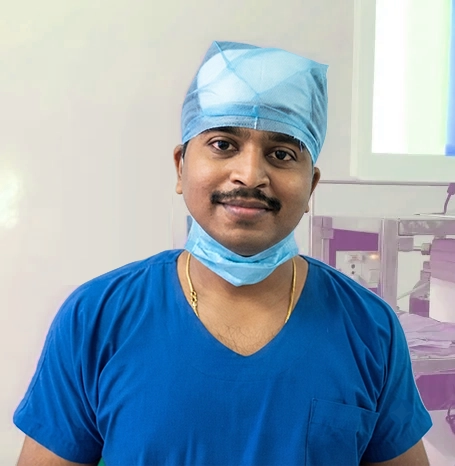
Dr. Pratheep Samraj
Consultant Paediatric & Neonatal Surgeon · Palliyadi, Kanyakumari
Super-specialist surgical care for newborns, infants and children, with expertise in paediatric urology, congenital anomalies, gastro-intestinal surgery and minimally invasive surgery.
Related Conditions
This is repairable, and the plan is set in the first days of life.
Whether it is one operation or three staged ones depends on the level, and that is worked out early. Bring the baby and the newborn records, including any X-rays taken.
Consultation 10:00 AM - 1:00 PM & 4:00 PM - 8:00 PM · 24-hour laboratory & pharmacy
In an emergency — green vomiting in a baby, a groin swelling that will not go back, severe tummy pain, or a newborn not passing urine or meconium — come straight to the hospital or to your nearest emergency department. Do not wait for a reply to a message.