Ureteric Reimplantation
Rebuilding the valve so urine stops flowing back to the kidney.
What is Ureteric Reimplantation?
An operation that re-tunnels the ureter through the bladder wall so it is compressed as the bladder fills, creating a working one-way valve. The less invasive alternative is an endoscopic injection of bulking agent at the ureter opening.
Hospital stay
Day care for injection; 3 to 5 days for reimplantation.
Performed by
Dr. Pratheep Samraj
- Normal
- The problem
Why It Is Done
Surgery is advised in these situations. The decision is always made after examining your child, never from a description.
- Breakthrough urinary infections despite preventive antibiotics
- High-grade reflux, which is much less likely to resolve on its own
- New or progressive kidney scarring, or falling function
- Reflux persisting into later childhood with no sign of improvement
Before the Day
- MCUG to grade the reflux and DMSA to assess scarring
- Constipation and bladder-emptying habits are treated first — they matter more than families expect
- Urine must be free of infection before surgery
During the Operation
- Endoscopic injection: a bulking agent placed through a cystoscope, no external cut, usually day care
- Reimplantation: the ureter is re-tunnelled through the bladder wall, open or laparoscopically
- A catheter is left for a short period after reimplantation
Afterwards, and at Home
- Endoscopic injection is usually day care; reimplantation typically 3 to 5 days
- Bladder spasms and blood-stained urine for a few days after reimplantation are expected
- Normal activity in two to three weeks
What Can Go Wrong
- Reflux persisting or recurring, more likely after endoscopic injection than reimplantation
- Temporary obstruction and swelling at the new join
- Bladder spasms, infection, bleeding
- Scarring already present does not reverse
Every operation carries risk. These are listed openly because a parent consenting to surgery is entitled to know them — not because they are expected. The surgeon will go through which of them actually apply to your child.
Common Questions
If your question is not here, send it on WhatsApp and the hospital team will answer.
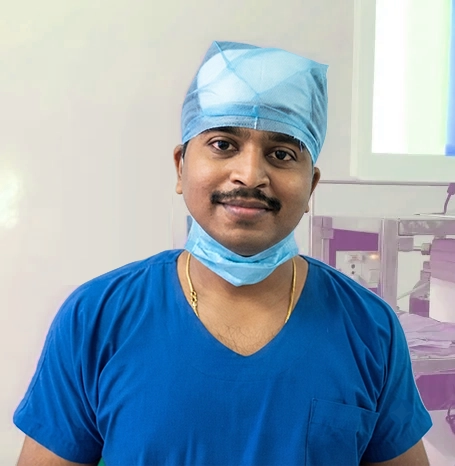
Dr. Pratheep Samraj
Consultant Paediatric & Neonatal Surgeon · Palliyadi, Kanyakumari
Super-specialist surgical care for newborns, infants and children, with expertise in paediatric urology, congenital anomalies, gastro-intestinal surgery and minimally invasive surgery.
Most reflux never needs this operation.
It is for reflux that keeps causing infection or is damaging the kidney, not for reflux by itself. Bring the MCUG and DMSA reports and we will go through whether surgery is warranted.
Consultation 10:00 AM - 1:00 PM & 4:00 PM - 8:00 PM · 24-hour laboratory & pharmacy
In an emergency — green vomiting in a baby, a groin swelling that will not go back, severe tummy pain, or a newborn not passing urine or meconium — come straight to the hospital or to your nearest emergency department. Do not wait for a reply to a message.